
Full transit, partial transit, or just a port stop?
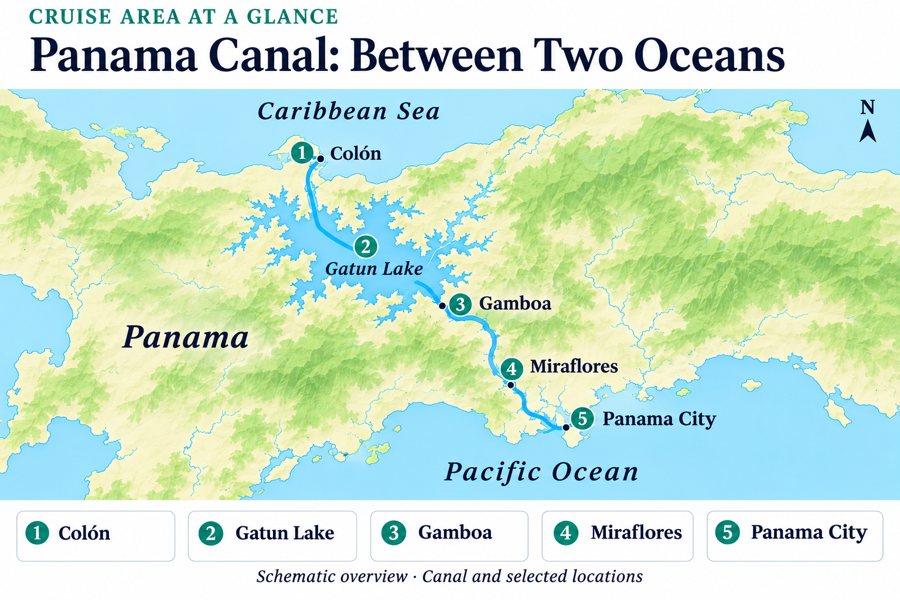
A call at Colón does not necessarily mean a transit through the canal. On a partial transit, the ship sails from the sea into Gatun Lake and then returns to the same side of the ocean; a full transit, by contrast, connects the Atlantic and Pacific. Check the individual itinerary to see whether it uses the historic or the new locks. One example of a partial transit is a 12-night Caribbean Princess itinerary sailing round trip from Fort Lauderdale. It combines Aruba and Cartagena with a partial transit through the new locks and calls at Colón, Limón, Grand Cayman, and Cozumel. This does not necessarily shorten the overall trip, but it does mean the same US home port is used for both the outbound and return journeys. Another published itinerary is a 16-night voyage from Fort Lauderdale to Los Angeles, with a full transit and several ports of call in Central America and Mexico. For this option, you will need to arrange your return journey from the destination port separately. Both are specific itineraries from a cruise brochure, not offers that are identical every year.
Distinguishing cruise season, rainy season, and travel arrangements
The Panama Canal Authority lists October through May as the cruise season and shows both full and partial transits for 2026/27. Panama’s tourism authority describes May through November as the “Green Season”; this is a countrywide climate and nature-travel classification, not an additional cruise schedule. The periods overlap in part, but they answer different questions: When do cruise lines operate canal voyages, and what rain and nature conditions can you expect on shore excursions? For a fly-and-cruise trip departing from Fort Lauderdale, Port Everglades is the relevant departure point. The port website describes getting there from nearby FLL airport by taxi or ride service; public buses stop in the Northport area. Allow time for baggage collection, port security, and the cruise line’s check-in requirements. The specific cruise terminal depends on the ship and departure and should be checked on the current port map. For the one-way full transit mentioned above, however, you will need to arrange your return journey from Los Angeles.
Before booking, check whether the actual itinerary says “partial transit” or “full transit,” and compare this with the embarkation and disembarkation ports, sea days, and shore stays. A canal or Colón port stop alone does not confirm a transit. For further regional planning, see the existing Caribbean overview, the Western Caribbean, South America cruises, and Transatlantic cruises. Practical links: ship overview, cruise lines, cruise travel tips, port overview, and cruise destinations.
Water levels and lock operations
The Panama Canal relies on fresh water from its watershed to operate its locks and supply the surrounding region. During dry periods, water reserves fall, and the canal authority responds by adjusting the permitted draft and the number of daily transits. For cruise passengers, this can affect transit planning because ships must comply with the applicable draft limits, and the available transit slots help determine the schedule. Heavy rainfall can cause water levels to rise sharply. To ensure safe operations, the authority monitors rainfall and lake levels and manages the locks and spillways; heavy rain led to a temporary suspension of traffic in 2010.
Heavy rain and canal closure in December 2010
On December 8, 2010, the Panama Canal Authority temporarily suspended traffic from midday because of weather conditions in Panama City and the canal watershed. Transits resumed on the morning of December 9. The authority reported historically high water levels at Gatun and Alhajuela following heavy rainfall and opened the spillway gates at Gatun and Madden. NASA documents the approximately 17-hour closure on December 8 and 9. The incident shows how heavy rain in the same water system can prompt a different operational response from low water levels.
Water conditions and cruise planning
For cruise passengers, the key details are therefore the planned transit and its timing: low water can affect permitted ship loading and available slots, while heavy rain can trigger a short operational interruption. The cruise line incorporates these operating conditions into the published itinerary and informs passengers of any changes.
The Panama Canal Authority publishes its current operating notices.

