
Cruise port
Longyearbyen Cruise Port: Bykaia, a visit to town and the Arctic
Longyearbyen tells a story of coal mining and polar research. Visit the town and Svalbard Museum, with directions from Bykaia and rules for excursions into nature.
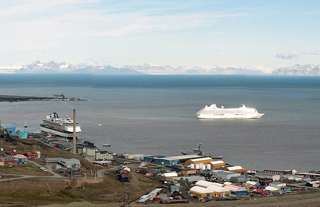
Photo: Hylgeriak / Wikipedia under CC1.2 or later
Longyearbyen lies on Adventfjorden in Spitsbergen. Mining, polar research and tourism have shaped the town, which is now the administrative centre of the Svalbard archipelago. When you go ashore, you encounter this history not only in the museum: taking off your outdoor shoes indoors is also part of local tradition.
Expeditions from Longyearbyen
Longyearbyen is the starting and ending point for expeditions to Spitsbergen. In HX’s published spring 2028 programme, MS Fram and MS Spitsbergen operate the 11-day voyage “Svalbard in Spring – The Return of the Sun”, which includes a stay in Longyearbyen. After spending time in town, you embark on the ship. The expedition takes in the west coast of Spitsbergen, Hornsund, Bellsund, the northwest and Ny-Ålesund before returning to Longyearbyen. Ice, weather and local conservation rules determine which places are actually visited.
From Bykaia into town
Larger cruise and cargo ships, among others, berth at Bykaia. Smaller expedition and excursion ships may use other piers; your trip’s arrival information will specify the exact berth.
As a general guide, the Svalbard Museum is about 1,600 metres from the harbour and around 600 metres from the town centre. Tourist shuttles and airport buses stop outside the building. The distance from your specific berth may differ. The Svalbard Museum visitor information describes its location and how to get there.
Whether you walk from the ship also depends on the weather, ground conditions and your mobility. Ask on board which exit is open and whether transport is available. If a shuttle is offered, check the price as well.
From the airport through town to your expedition ship
At Svalbard Airport, the airport bus goes to the hotels in Longyearbyen. It runs to meet arriving flights and before departures; the journey into town takes about 15 minutes. The HX package mentioned includes flights to and from Oslo, as well as hotel nights in Longyearbyen. Which hotel and ship transfers are included depends on the travel package you booked.
From your hotel, take the arranged transfer or a taxi to your expedition’s pier. Keep the specific quay and embarkation time to hand: Bykaia is one possible berth, but every trip has its own meeting point. If you have luggage, coordinate your pickup and drop-off with check-in. For your return journey, plan disembarkation, baggage collection, the airport transfer and check-in together. The Svalbard Airport bus and taxi information is useful if you are arranging your own transport.
Coal, research and stories from the Arctic
In 1906, American businessman John Munroe Longyear founded a mining settlement here. Ten years later, in 1916, Store Norske took over operations. Coal mining left visible traces and shaped everyday life for many years. Coal production at Gruve 7 ended on 30 June 2025. After the clean-up work, the mine entrance was closed on 4 May 2026. The end of production and the closure of the entrance were two separate events. Today, research, education and tourism are also part of life in town.
The Svalbard Museum connects this history with whaling, hunting and polar expeditions. The archipelago’s wildlife and geology also come to life there. Our suggestion for a visit to town: make the museum the focus of your visit and learn about the landscape you are exploring by ship. It is generally open year-round; check the current opening hours before your visit.
The museum recommends allowing 60 to 90 minutes for the permanent exhibition. The entrance, exhibition, toilets and museum shop are on the ground floor and, according to the museum, are wheelchair- and pushchair-accessible. Large coats, bags and backpacks should be left in the cloakroom, which has free lockers. The museum describes taking off outdoor shoes as a Svalbard tradition; shoe covers are available there.
Different rules apply outdoors
A walk in Longyearbyen is different from an excursion into the wilderness beyond the settlement. Outside settlements, you are required to carry suitable means of deterring polar bears. You also need knowledge of local conditions, safety rules and regulations for protecting nature and cultural heritage. Our suggestion: choose a suitably guided tour for an excursion into the wilderness rather than continuing on your own from a stroll around town. Tourist landings in protected areas are subject to designated landing sites and other rules; this does not mean you have general permission to go ashore anywhere. The travel and safety advice for Svalbard can help you choose and prepare for your excursion.
Human traces dating from before 1946 are generally protected. Historical remains are therefore left where they are.
Light and season are part of the visit
A visit to town feels different under the midnight sun than during the dark season. There is everyday life and tourist activity in winter too, but in different light and weather conditions. Choose an activity that leaves you enough time to get back. For a guided tour, allow for both its end time and the onward journey to the harbour.
Longyearbyen Cruise Port Map
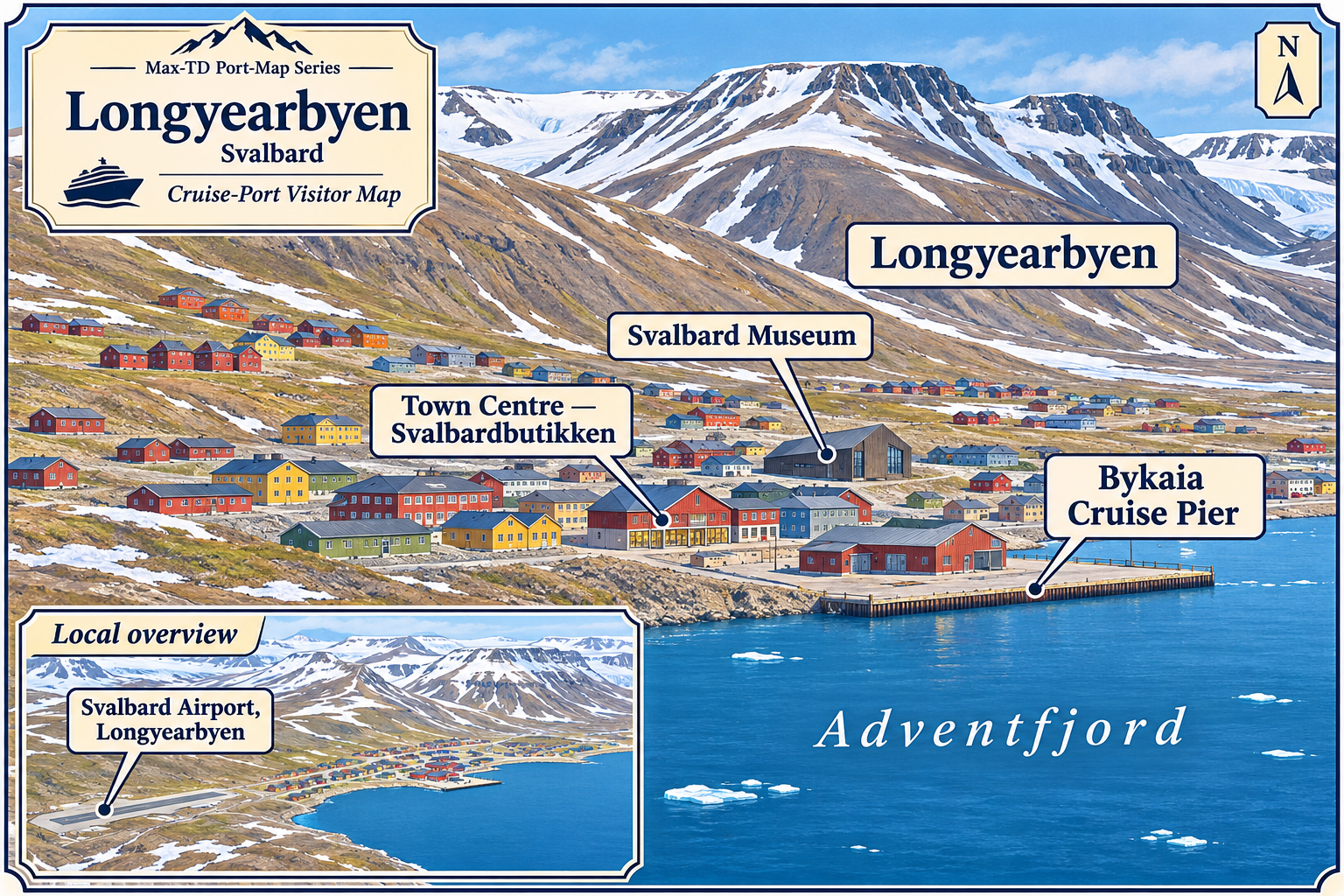 Enlarge map ↗
On shore

