
Cruise port
Pinhão on the Douro: River Landing and Railway Station
River landing point, historic railway station and the Alto Douro wine landscape around Pinhão.
The Cais do Pinhão on the Douro
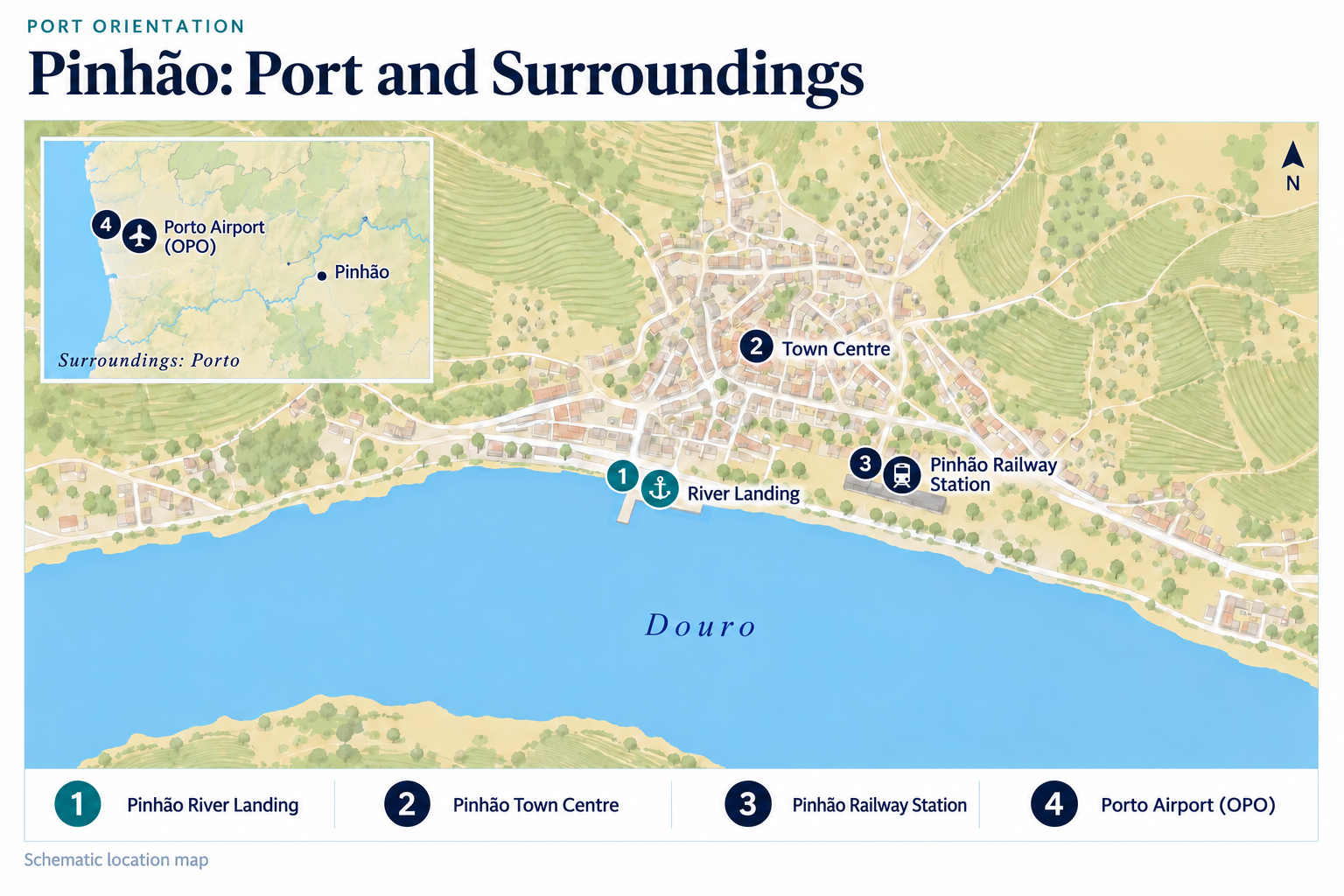
The river port of Pinhão is in the municipality of Alijó, on the right bank of the Douro. Cais do Pinhão is located at river kilometre 124 and is designated as a local landing point for river cruises. DouroAzul offers multi-day riverboat hotel cruises on the Douro between Porto and Barca d’Alva, as well as short Rabelo boat trips in Porto.
Pinhão’s historic railway station
Estação Ferroviária do Pinhão was built in the 19th century. Its façade features 24 panels with more than 3,000 azulejos, depicting scenes and motifs in blue-and-white ceramic tile. Pinhão is on the Douro railway line, which connects Porto and Pocinho.
The wine landscape of Alto Douro
Pinhão lies in a cultural landscape shaped by the Douro and its tributaries. The Varosa, Corgo, Távora, Torto and Pinhão rivers define the Alto Douro; the Marão and Montemuro mountain ranges shield the region from harsh Atlantic winds. The Douro is one of the river cruise regions.
The vineyards feature different construction methods. Older socalcos, laid out before the phylloxera crisis, are narrow, irregular terraces supported by schist walls; a terrace often accommodates just one or two rows of vines. After the phylloxera crisis, the vineyards were replanted in the late 19th and early 20th centuries. The terraces from this period are wider and more regularly laid out.
In addition to the vineyards, the cultural landscape includes quintas with residences, farm buildings and wine cellars. Villages, chapels and historic paths link the cultivated land with the settlements. The Alto Douro wine landscape is a UNESCO World Heritage Site. In the municipality of Alijó, the wine estates with Pinhão addresses include Quinta da Foz on the EM590, Quinta da Roêda on the N323, Quinta de la Rosa, Quinta das Carvalhas near Ponte de Ferro, and Quinta do Bomfim. On the plateau near Favaios, Moscatel is made from the Moscatel Galego grape variety.
Alijó is predominantly agricultural. The municipality’s wines include red, white and rosé wines with protected designation of origin (DOC or DOP), as well as Port, Moscatel and sparkling wines. The region’s wine culture is closely linked to dishes from the Douro region and Trás-os-Montes.
Pinhão: Port and Surroundings
 Enlarge map ↗

