
Cruise port
Dubrovnik
Dubrovnik on an Adriatic cruise: Gruž port, routes to the Old Town, transfers and planning your time ashore.

Photo: dago
Dubrovnik’s cruise port is in Gruž, not directly beside the historic Old Town. This means two decisions matter when going ashore: how to get from the port to Pile Gate, and how much time to allow for getting back to the ship. The Old Town is easy to reach, but it is not right by the quayside.
Cruise calls and visiting the city
Dubrovnik is a port of call on cruises through the Adriatic and the eastern Mediterranean. Other ports along the Croatian coast include Trogir and Split. Your own ship’s departure time and confirmed berth are the key factors when planning your time ashore.
From Gruž port to Pile Gate
The walk takes about 30 to 40 minutes. The port information warns of summer heat and recommends comfortable shoes and water. If you take the public bus, the journey from the port to Pile Gate takes around 10 to 15 minutes, depending on traffic. The port authority says that city buses run regularly; for the return journey, however, the current departure options and allowing enough time to reach the quay are still essential. A taxi is another option; according to the port information, the ride takes about 7 to 10 minutes, depending on traffic.
If you have booked a private tour or transfer, make sure the drop-off and pick-up points are explicitly stated as being in Gruž or by the Old Town. This helps avoid confusing the port entrance with the meeting point. If you arrive by tender instead, follow the landing point and tender-boat schedule confirmed by the operator; directions from Gruž will not necessarily be the right starting point.
Visitor numbers and “Respect the City”
For January to September 2026, the port authority reports 423 cruise calls and 571,134 passengers, describing arrival planning as a coordinated process agreed nearly two years in advance. The “Respect the City” program aims to balance cruise traffic with protecting the historic Old Town and residents’ quality of life. Even so, visitors going ashore may encounter crowds on the routes between Gruž, Pile and the Stradun. The overall passenger total does not indicate how crowded it will be on any particular day.
Return journey and timing
The journey, waiting time and walk from the drop-off point back to the ship all take time. If you visit the Old Town, plan your return journey from the outset; buses and taxis may also be subject to delays.
Old Town and city walls
From Pile Gate, the route leads into the historic Old Town. If you want to visit the city walls, set aside a separate block of time: admission, the climb and the walk along the walls are in addition to the time spent exploring the Old Town. If your visit is shorter, you can focus on the lanes, squares and a break. Many side streets have stairs and steep inclines; comfortable shoes and water are useful in warm weather. The latest port information on the connection between Gruž and the Old Town complements the berth and return times for your trip.
Dubrovnik Port Map
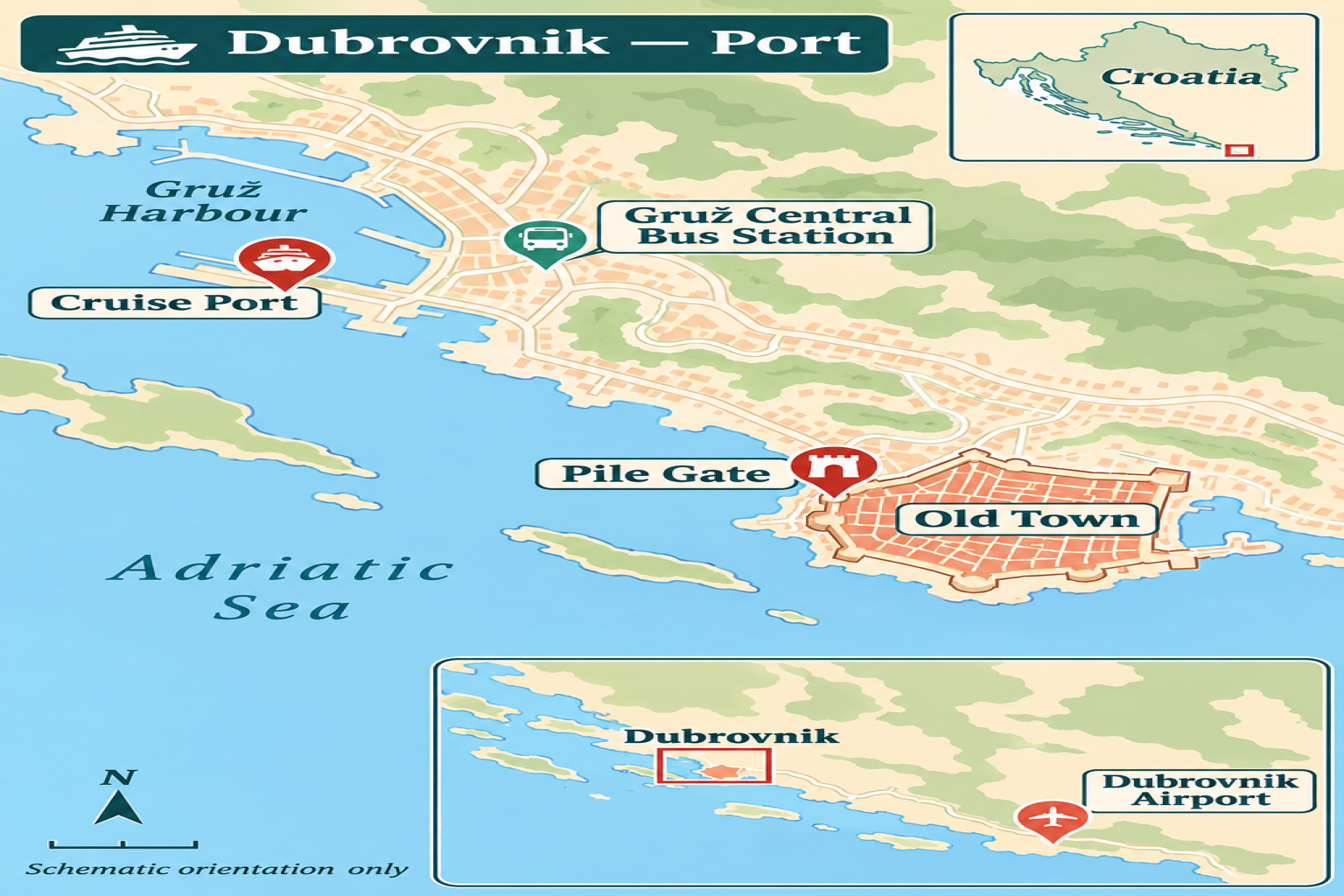 Enlarge map ↗
On shore
Excursions around Dubrovnik
Ragusa: ancient fortified city and naval power
Take a walk on the city walls, almost 2km in length, which surround the ancient fortified city. There follows a visit to the Naval Museum. The excursion is accompanied by a local tour guide.
Cavtat and the island of Lokrum
The excursion begins with a trip by motorboat to the small town of Cavtat, which is well-known for its numerous beaches to be found in the sheltered waters of a bay. There will be free time for a walk and a drink, or to visit the orange gardens. The tour moves on to the island of Lokrum, formerly owned by the Benedictine abbey, with its numerous exotic plants and unusual forest vegetation. Free time to swim in the Adriatic or to go for a short walk amongst the pines and cypresses.
Trip to Dubrovnik
The excursion begins with a panoramic coach trip with views of Dubrovnik and the coast. Next stage of the trip is a guided tour of the port city's old town. The visit takes in the Franciscan monastery, Europe's oldest chemist's shop (1317), the Dominican monastery and the 15th century Rector's Palace. The tour is rounded off with a visit to the cathedral, the Palais Sponza, the church of St. Blasius and the Onofrio fountain.

