
Destinations | Cruise ships | Ports for your cruise | Cruise lines | Cruise Tips | Cruise Photos | Cruise News
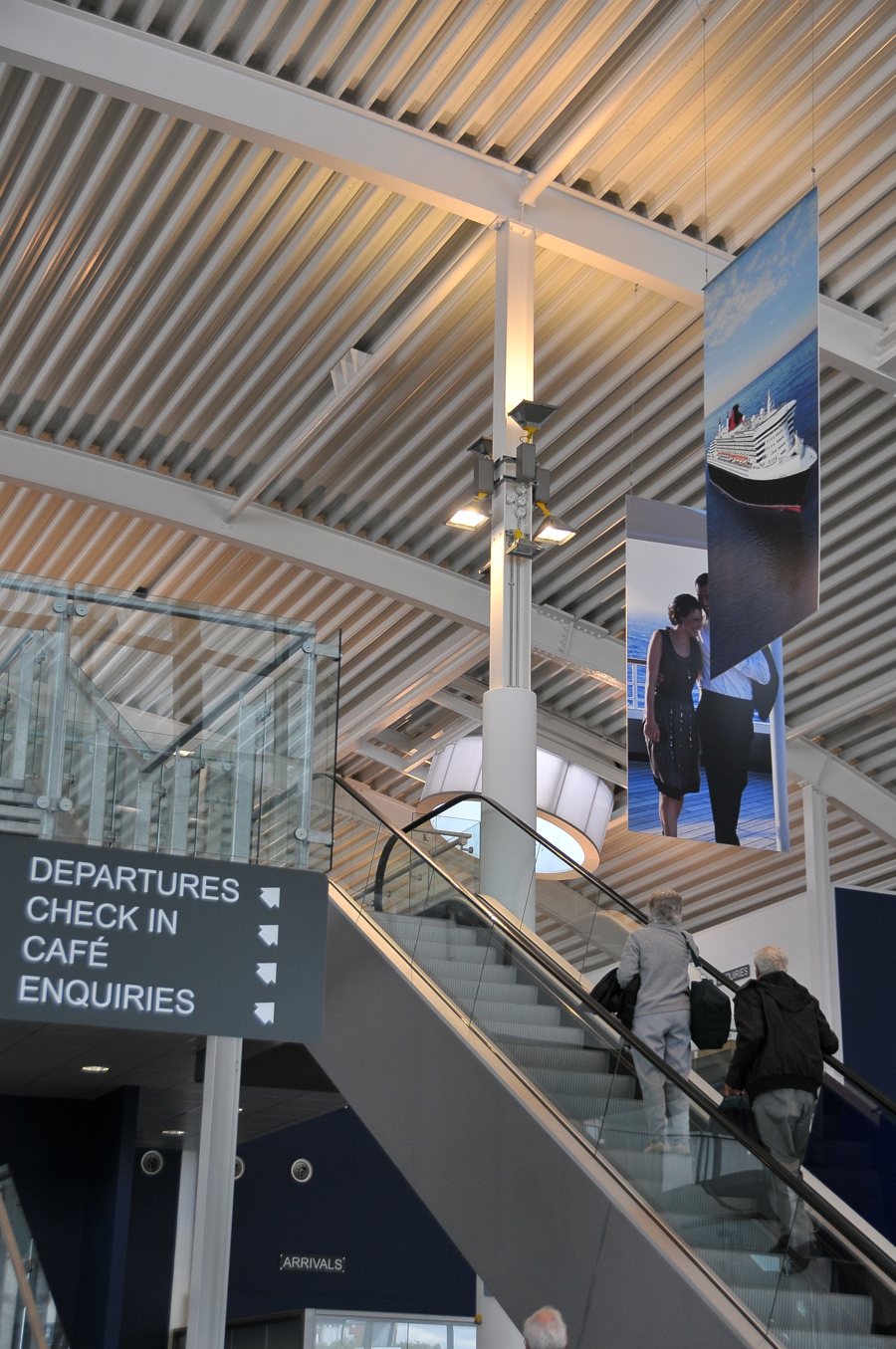
Layout and Functions of a Cruise Terminal
A cruise terminal connects arrival from shore with access to the ship. Depending on the port and stage of the voyage, the process may involve a port of call or a full passenger turnaround. Check-in and baggage drop-off are therefore not automatically part of the same process at every stop; arrival areas, parking options and security checks also vary by location.
Arrival and landside access
The landside arrangements determine how travelers get from the public transport network or by car to the port area and then to the terminal. The Ocean Cruise Terminal in Southampton shows how specific local guidance can be: Associated British Ports lists an allocated arrival time, a passenger drop-off zone and short-stay parking. Long-stay parking must be booked in advance there. These details describe the Southampton location and are not standard facilities at every cruise port; getting to the cruise port depends on the specific location.
Processing passengers during a turnaround
When a voyage begins or ends at a port, procedures for arriving and departing passengers are often added. At the Port of Helsinki, the H-Terminal hall in Hernesaari serves passengers who begin or end their cruise there. The port lists check-in, baggage handling and, when required, border control as functions of this hall. This is a specific example of a passenger turnaround; other ports may use different buildings or procedures for this.
A terminal may provide waiting and circulation areas for these steps. The stages passengers actually go through depend on port operations and the specific voyage. At a port of call only, check-in for a new voyage is not automatically part of the visit.
Security and border checks
Border checks are distinct from routine arrival and baggage handling. For passenger turnarounds, the Port of Helsinki lists them as a possible, but not mandatory, step at the H-Terminal. Whether a check is required and where it takes place depends on the route and the authorities responsible. This information cannot necessarily be applied to other ports or port calls.
From the terminal to the ship
Once the procedures required at the specific location have been completed, the authorized passenger route leads to the quay and the ship’s entrance. Disembarkation follows the reverse route; depending on the port, it may include baggage collection, checks and onward transportation. The Southampton and Helsinki examples illustrate two different perspectives: arrival and parking arrangements on the one hand, and passenger turnaround procedures on the other. The facilities travelers use are determined by the port on the specific day of travel, not simply by the general term “cruise terminal.”
Photo: Alesia Belaya
