
Destinations | Cruise ships | Ports for your cruise | Cruise lines | Cruise Tips | Cruise Photos | Cruise News
Cruise port, passenger port and ferry terminal: same words, different functions?
“Passenger port,” “cruise port” and “ferry terminal” do not refer to three interchangeable facilities. A passenger port is a broader port area where different types of passenger transport may take place. A cruise berth is where a cruise ship docks. A terminal building, by contrast, handles specific processes for travelers, such as check-in and baggage handling. A ferry terminal is designed for regular services; depending on the route, vehicles may be handled there as well as passengers.
Cruise berths and passenger turnover
A cruise ship may call at a port for a limited stay without the cruise beginning or ending there for its passengers. In a so-called turnaround, however, many passengers begin or end their cruise there. In that case, arrivals and departures, check-in and baggage handling become more important. The berth describes where the ship is docked; the terminal describes the facilities and processes that support passenger turnover. The two may be located right next to each other, but they serve different purposes.
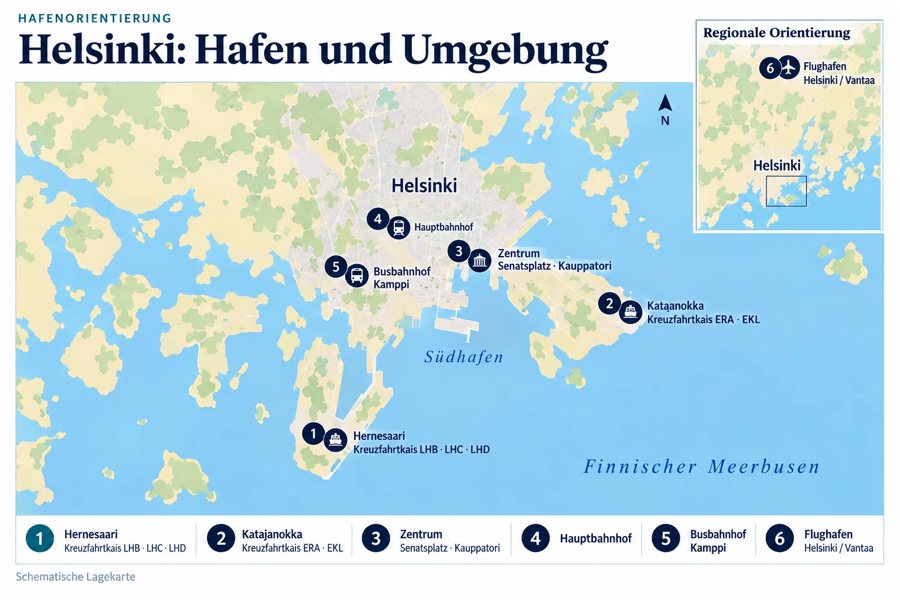
Helsinki shows why these terms cannot be reduced to a single pier: cruise ships use berths in several port areas there, including South Harbour, Katajanokka, West Harbour and Hernesaari. The H-Terminal hall at the tip of Hernesaari serves turnaround passengers. Check-in and baggage handling take place there, along with border checks when needed. This function is part of passenger turnover; the berth itself remains the ship’s docking place. A ship that calls only for a stopover also has a berth, but that does not mean the same procedures as for a full passenger changeover are necessary.
Regular ferry services
Ferry traffic centers on recurring services between ports of departure and destination. In Helsinki, the terminals are assigned to specific routes: Viking Line ships sail from Katajanokka to Stockholm and Tallinn, while Tallink Silja ships depart daily for Stockholm from the Olympia Terminal. Eckerö Line and Tallink Silja Line operate to Tallinn from West Terminal 2, several times a day. In Vuosaari, Finnlines ships sail from Hansa Terminal to Travemünde; Eckerö Line offers check-in there for services to Muuga in Estonia.
These examples make the operational distinction clear. A cruise call is a ship’s visit during a voyage; a ferry terminal serves scheduled departures on a particular route. For travelers, both the terminal name and the booked service therefore matter. The destinations Tallinn, Stockholm and Travemünde represent different regular ferry routes in the Helsinki example.
Finding the right term
When looking up port information, it helps to distinguish four questions: Which port area is the ship in? At which berth does it dock? Which terminal do passengers use? And does the facility serve a single cruise call or a regular ferry route? A port area can include several berths and terminals; a berth does not necessarily have its own terminal building. A building, in turn, may support different passenger processes. The operator is the organization responsible for the port or individual facilities.
Keeping these levels separate makes it easier to match schedules and terminal information accurately. “Passenger port” describes the broader setting, “cruise berth” the docking place and “ferry terminal” the facility used for scheduled services. For a specific itinerary, the terminal name shown remains decisive, since different ships may depart from different piers even within the same port.
