
Destinations | Cruise ships | Ports for your cruise | Cruise lines | Cruise Tips | Cruise Photos | Cruise News
Accessibility in cabins and public areas
Accessibility on a cruise ship depends on more than the cabin alone. What matters is having an accessible route throughout: from the bed to the bathroom and elevator, and on to the restaurant, theater, outdoor deck and shore access. So a cabin described as accessible does not, by itself, indicate which public areas can be reached or what personal assistance is available. Routes and entrances may also differ from one part of a ship to another.
Cabin and bathroom
Door width and thresholds matter, as do the maneuvering spaces beside the bed and in the bathroom. In the shower, the entry, grab bars and a seat can make a practical difference; reachable storage and an emergency call system are also part of the picture. A balcony or terrace may have an additional threshold even when the interior is accessible. That is why the specific features of the cabin you choose matter more than the category label alone.
Provider information shows how much these cabins can vary. TUI Cruises describes the accessible cabins in its Mein Schiff fleet as offering more space, wider doors, grab bars, emergency telephones and proximity to elevators. According to the provider’s current information, they can only be booked by guests who permanently rely on a wheelchair; the doors do not open electrically. The same page says standard cabins are suitable only for guests using a foldable wheelchair that is not needed at all times. Cabin signs there are not available in Braille.
Routes and public areas
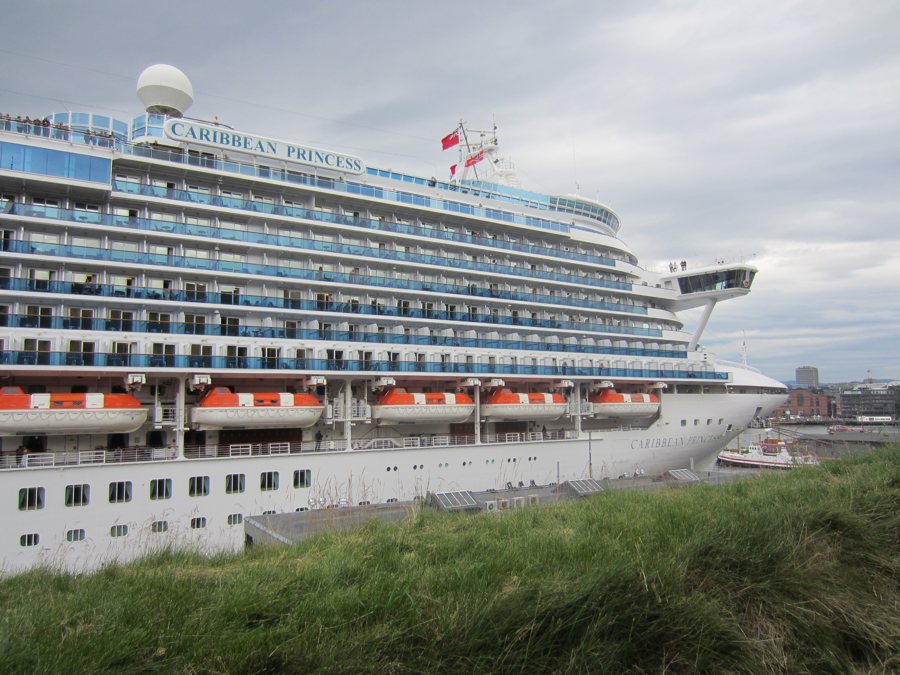
Accessible access to a destination does not automatically mean that every entrance or route leading there can be used. The Caribbean Princess illustrates this in its deck-by-deck route guide: on Deck 5, accessible restrooms are shown by the midship elevators on the port side; the accessible entrance to the theater is only via Deck 7. Certain accessible corridors connect the elevators with public areas. The specific route between decks is therefore just as important to planning as the features at the destination.
A clear travel plan should therefore map the actual sequence of cabin, elevator and destination. Narrow passages, thresholds and changes of deck all matter; even a restroom on another deck can be important in everyday use. The choice of a cruise and the cabin location should be considered together, since getting around onboard is part of overall comfort.
Assistance and going ashore
Physical accessibility is different from personal assistance. Cabin features do not automatically include help with transfers or everyday activities. On Mein Schiff, the crew does not provide personal assistance. Guests who need help with transfers or everyday activities therefore need to consider bringing their own companion. The specific situation—such as transfers, mobility aids or support outside the cabin—is more informative than a general statement about an aid being used.
Getting from the ship to shore is another distinct part of the journey: gangways, tender boats, shuttles and excursion vehicles may all have different ways of boarding. The port and berth affect how things work, so confirmation of an accessible cabin does not cover going ashore. Information about the embarkation process helps with planning the route through the terminal; for going ashore later, the conditions on the specific itinerary remain decisive.
To assess whether a cruise is suitable, consider the ship, cabin category, required maneuvering space and the areas you want to visit together. Anyone who needs specific assistance can share these requirements with the cruise line and—with booked excursions—with the tour operator. This makes it possible to consider the cabin, routes onboard and access ashore as connected parts of the travel arrangements.
Photo: Markus Lenk
