
Destinations | Cruise ships | Ports for your cruise | Cruise lines | Cruise Tips | Cruise Photos | Cruise News
ISPS Security Zones at Cruise Ports: Passenger Access and Public Space
A cruise port may include public paths as well as controlled port facilities. The port area is therefore not automatically open to everyone everywhere: access controls may apply to passenger terminals, ships and certain operational areas. The International Ship and Port Facility Security (ISPS) Code sets out the international security framework for ships and port facilities. However, it does not establish a uniform visitor plan for promenades and viewpoints in every port city.
What is the ISPS Code for?
The ISPS Code supplements the SOLAS Convention on maritime safety. For port facilities, it requires security assessments and a security plan. Among other things, the plan must include measures to prevent unauthorized access to the facility, ships berthed there and restricted areas. Access controls are therefore intended to protect port operations and people on board and ashore—not to regulate general visits to the city.
The Code uses three security levels. Level 1 refers to the minimum protective measures that apply at all times. At Level 2, additional measures are implemented when the threat is elevated. Level 3 provides for further specific protective measures when a security incident is likely or imminent. The access restrictions visitors may encounter therefore depend on the particular facility and the security situation in effect.
Public waterfront path and controlled area
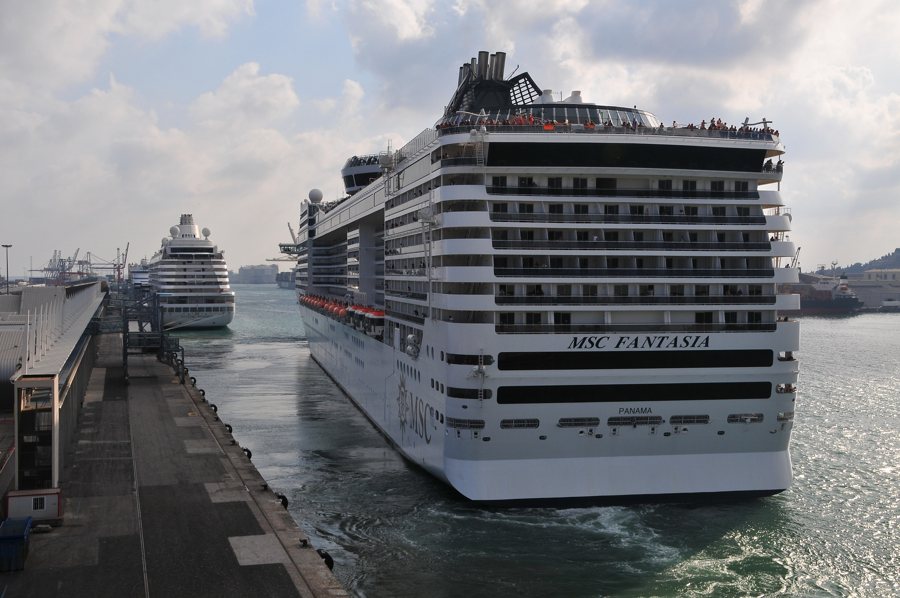
A waterfront promenade and a neighboring pier may be subject to different rules. A waterfront path may be open to the public, while access to the terminal, a berth or an operational area is controlled. Being close to a ship does not automatically make an area open to public visitors. Conversely, a controlled terminal entrance does not mean that every path along the harbor is closed.
The boundaries are location-specific: port and terminal operators enforce the rules for their respective facilities, and security plans apply to specific installations. The ISPS Code alone therefore cannot tell you from which viewpoint a particular ship is visible or which promenade is open. That depends on the port layout and the access rules in force locally.
For visitors, local rules are what matter
Anyone visiting a port should distinguish public visitor areas from terminal and pier access points. Signs, entry checks and barriers indicate where access is restricted. Ships and terminals may be accessed only via the designated routes and with the required authorization. General security rules are no substitute for specific local directions.
The three ISPS levels explain why protective measures may be increased depending on the situation; they are not a map of public and restricted areas that travelers can consult. For a planned walk or viewpoint, local port information is what matters. This makes it possible to distinguish security areas from public urban space without treating every waterfront area in a port as either open or closed.
Photo: Alesia Belaya
