
Destinations | Cruise ships | Ports for your cruise | Cruise lines | Cruise Tips | Cruise Photos | Cruise News
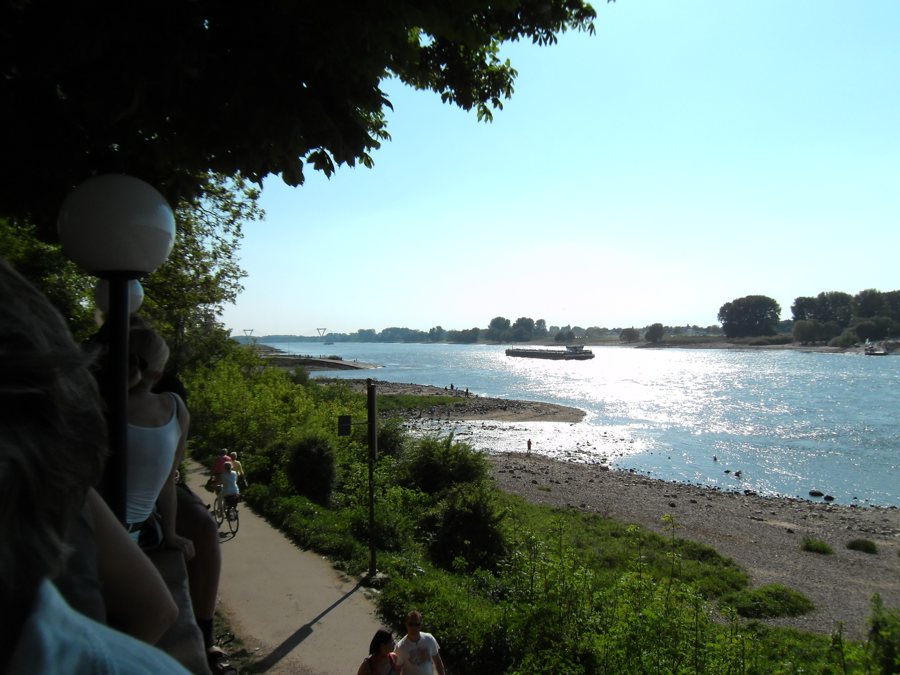
Water Levels, Seasonal Navigability, and River Cruises
Water levels affect conditions along a river route, but their impact cannot be determined from a single gauge reading or a fixed season. What matters are the conditions on each individual stretch: available channel depth and width, local bottlenecks, and operational restrictions. The same river can behave differently along the route.
Water levels and channel depth
A gauge reading describes the water level at the corresponding measurement location. It is not the same as the depth of the navigable channel, nor does it directly indicate how much water remains beneath a vessel at another point along the route. For this reason, authorities publish target depths and local restrictions for individual stretches separately from gauge readings.
At low water, less depth may be available for navigation. Conversely, high water does not automatically mean that all bottlenecks disappear: water level, channel depth, and clearance beneath bridges are different measurements. The specific local conditions matter, not merely whether a gauge reading is rising or falling.
Why different stretches respond differently
The Rhine does not have a uniform seasonal flow pattern. The German Federal Institute of Hydrology describes a summer peak on the Alpine, High, and Upper Rhine, while the Middle and Lower Rhine experience a winter peak due to the influence of the Main and Moselle rivers. Low-water conditions can also have different causes and occur at different times: late-summer and early-autumn periods are often linked to a lack of precipitation and high evaporation; low water in winter can occur when precipitation remains locked up as snow and ice.
Documented events show that these periods are not confined to a single summer. For the Rhine, the BfG records low water in July and August 2022, as well as from August to November 2018. These historical periods describe past events, not a forecast for a future cruise.
A season is not a forecast
A seasonal tendency is not proof of current navigability. The date, the river stretch, and the relevant operational assessment all matter. A gauge reading or a historical low-water period alone does not establish the depth along the entire route or whether a particular vessel can follow its planned itinerary unchanged. As a result, conditions and their effects can vary from one stretch to another on a river cruise, even when all the stretches are part of the same river.
Photo: Hans Jürgen Lenk
