
Destinations | Cruise ships | Ports for your cruise | Cruise lines | Cruise Tips | Cruise Photos | Cruise News
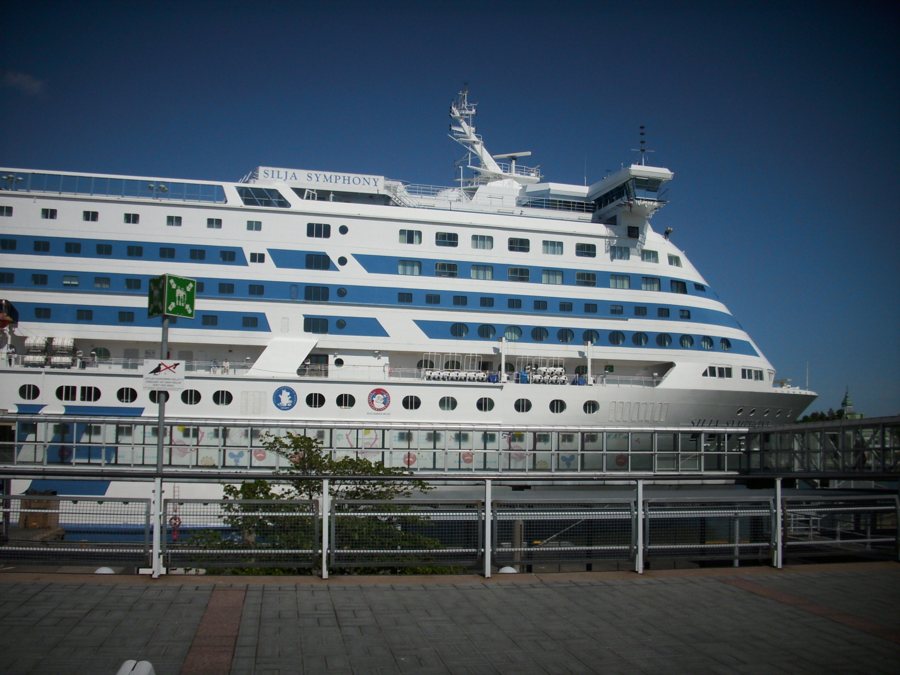
Accessibility at the cruise terminal: Terminal and access to the ship
An accessible terminal alone does not tell you what the entire journey to the ship will be like. Between arrival and the cabin, there are several transitions: getting to the quay, entering the terminal, check-in and security screening, crossing the quay and boarding via the gangway, and finally getting around and receiving assistance on board. Accessibility therefore concerns not just one building, but several consecutive stages.
Several points of transition, not a single feature
A port and a terminal can be separate stages in the journey. Information about a terminal therefore does not automatically describe the route from the vehicle to the quay. The berth data for Hernesaari lists no shore-side gangways at LHB, LHC or LHD; the overview gives 2021 as the date of the last survey. This port information concerns the infrastructure at the quay and does not tell you which ship’s gangway will be used on a specific trip. Whether the transition is accessible depends on the ship, berth, gangway and conditions while mooring. A general statement about the accessibility of the port building does not describe this connection in detail.
There are further questions to consider on board. Space to manoeuvre, lifts, doors, cabins and toilet facilities are part of the ship and are described by the cruise line. For accessibility in cabins and public areas, space to manoeuvre and the facilities available are key. Describing a terminal as accessible does not indicate which cabins are available or which routes on a particular ship are step-free. Accessibility on a trip therefore depends on how the individual stages work together, not on a single feature of the port.
Consider the terminal and access to the ship separately
The Port of Helsinki lists accessible entrances, lifts and ramps, toilets, signage and pick-up points at its passenger terminals. It also offers free assistance in the terminal, including help getting to check-in and security screening, as well as embarking and disembarking. The port asks travellers to notify their travel agency or cruise line of any assistance needs when booking or no later than 48 hours before departure. These details illustrate the specific information a port authority can provide about its facilities and services.
However, assistance in the terminal and the gangway are not the same thing. The Port of Helsinki’s information describes support from port staff and also states that the cruise line is responsible for assistance on board. Whether a particular transition onto the ship can be used with a mobility aid cannot be determined from the terminal’s general facilities. It depends on the ship’s facilities, the access method used and the circumstances at the specific berth.
Consider assistance and responsibilities
For planning a trip, two kinds of information therefore complement each other: the port authority describes arrival, the terminal and its assistance services; the cruise line provides information about the ship, gangway and assistance during the crossing. It is best to make a specific enquiry about the relevant stage—for example, the route from the pick-up point to check-in, the transition from the quay onto the ship, or the routes to the booked cabin. This clarifies which organisation can provide the information and where an answer from the ship operator is needed.
Photo: www.neandertours.de
