
Destinations | Cruise ships | Ports for your cruise | Cruise lines | Cruise Tips | Cruise Photos | Cruise News
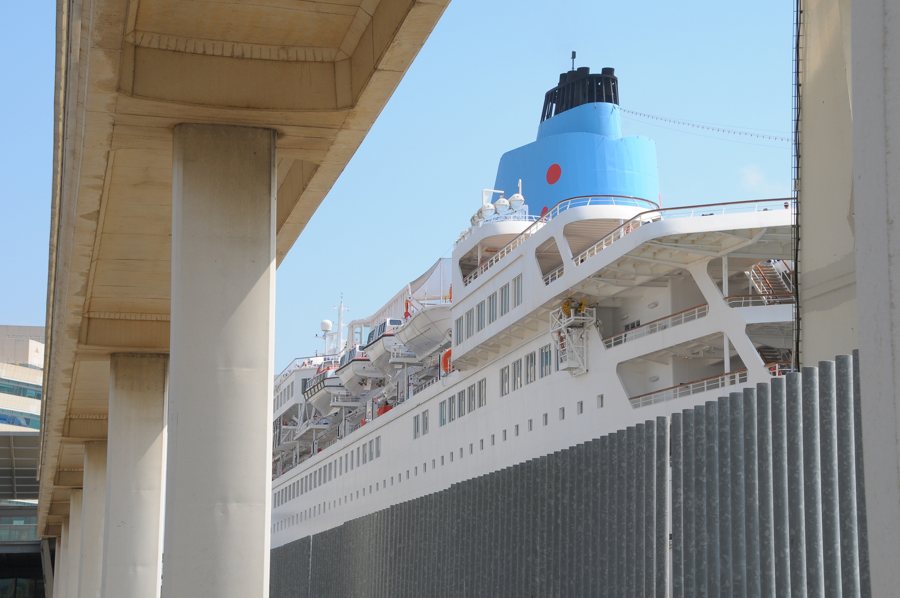
Hull Form and Water Resistance
The hull moves through the water and must overcome its resistance. Its shape affects how easily it can do so. A favorable hull form can reduce resistance and, in turn, the energy needed to travel; however, a single feature such as a pointed bow is not enough to predict a ship’s performance.
Hull form and operating conditions
Resistance depends on more than the basic shape. Speed and draft also play a role in the design. The IMO GreenVoyage2050 portal notes that designs are often optimized for a specific design draft and speed. Different drafts, loading conditions, trims, and lower speeds should also be taken into account for the expected use. A ship in ballast or partially loaded therefore does not necessarily operate under the same conditions as in the design case on which the vessel is based. The effect of a bulbous bow also depends on how it interacts with the hull as a whole and on operating conditions. IMO GreenVoyage2050: Hull form optimization
Design for the intended use
Hull form optimization is a design consideration, not a simple add-on. The IMO portal describes it as a measure for newbuilds and emphasizes that the expected annual operating profile should inform the design. Hull form and operating conditions go hand in hand: a solution that is favorable at a set draft and speed does not automatically perform the same way under other operating conditions. A ship’s silhouette alone is therefore not enough to determine its specific fuel consumption or speed.
The condition of the underwater hull matters too
The basic shape is only one factor in resistance. Fouling or other biological roughness on the underwater hull can increase flow resistance and change the relationship between speed, propulsion power and fuel consumption. According to the IMO portal, the extent of the effect depends, among other things, on the fouling and the operating profile. Hull maintenance therefore affects the condition of the surface; it does not alter the hull’s original design.
When comparing claims about ship efficiency, it is therefore important to establish whether they refer to the hull form as designed, a particular loading and operating condition, or the current condition of the underwater hull. Without this context, broad comparisons of fuel consumption are of little value.
Photo: Alesia Belaya
