
Destinations | Cruise ships | Ports for your cruise | Cruise lines | Cruise Tips | Cruise Photos | Cruise News
Ship Sections, Shipyard Construction and Undocking
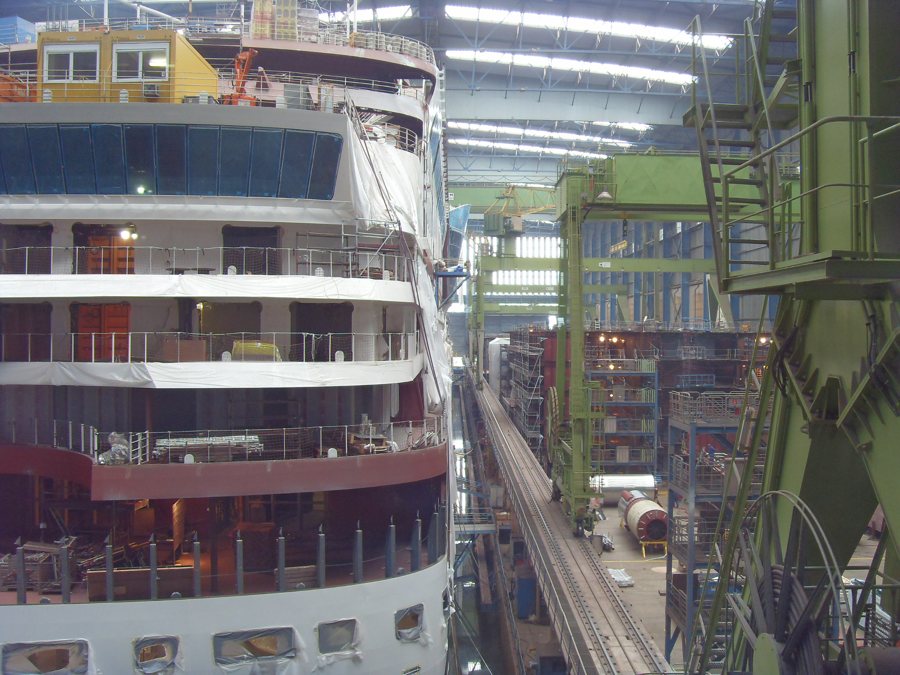
Large cruise ships are not necessarily built piece by piece directly in the dry dock. In block construction, smaller units are prefabricated, assembled into sections and larger blocks, and ultimately joined in the dock to form the ship’s hull. “Undocking” refers to the moment when the ship leaves the dry dock—not necessarily when it is completed or handed over.
From plate to section
MEYER WERFT describes the construction of its cruise ships as a modular process: steel plates are cut and welded into panels. Profiles, frames and side walls are then used to form sections. Pipes and electrical systems are installed before the sections are joined into larger blocks. The shipyard cites around eight to ten sections per block and approximately 80 blocks for a cruise ship; individual blocks can weigh up to 800 tonnes. These figures describe the shipyard’s process and are not fixed numbers for every ship or every shipyard.
The assemblies thus grow in stages: steel plate, panel, section, block, and finally ship. The degree of prefabrication matters in practice because not every pipe and wall panel has to be installed individually in the dock. However, the precise division depends on the design and the procedures used by each shipyard. The choice of materials for the ship’s hull depends on the type of vessel and the applicable construction rules.
Assembly and undocking
In the dry dock, the large blocks are joined, welded together and wired. Undocking is the move from this construction site to the shipyard harbor or an outfitting quay. By then, the hull may already be afloat, even though extensive work remains.
A clearly dated example is the AIDAnova: In a statement dated August 14, 2018, MEYER WERFT announced that undocking was planned for August 21. For the period afterward, up to the planned transfer via the Ems River at the end of September, the shipyard described further outfitting and interior work, testing of the LNG engines, and acceptance procedures by the cruise line. This illustrates the difference between undocking and delivery, but reflects the construction and schedule plan for that one ship at the time.
Keel laying, undocking and handover are therefore distinct stages in the construction process: the sections and blocks are fabricated and assembled beforehand; after the ship leaves the dock, outfitting, testing and acceptance procedures may follow. The sequence and scope of this work vary by ship. A dated example of shipyard history and passenger-shipbuilding is Chantiers de l’Atlantique in Saint-Nazaire.
MEYER WERFT explains its modular production process using sections and blocks.
Photo: Markus Lenk
