
Destinations | Cruise ships | Ports for your cruise | Cruise lines | Cruise Tips | Cruise Photos | Cruise News
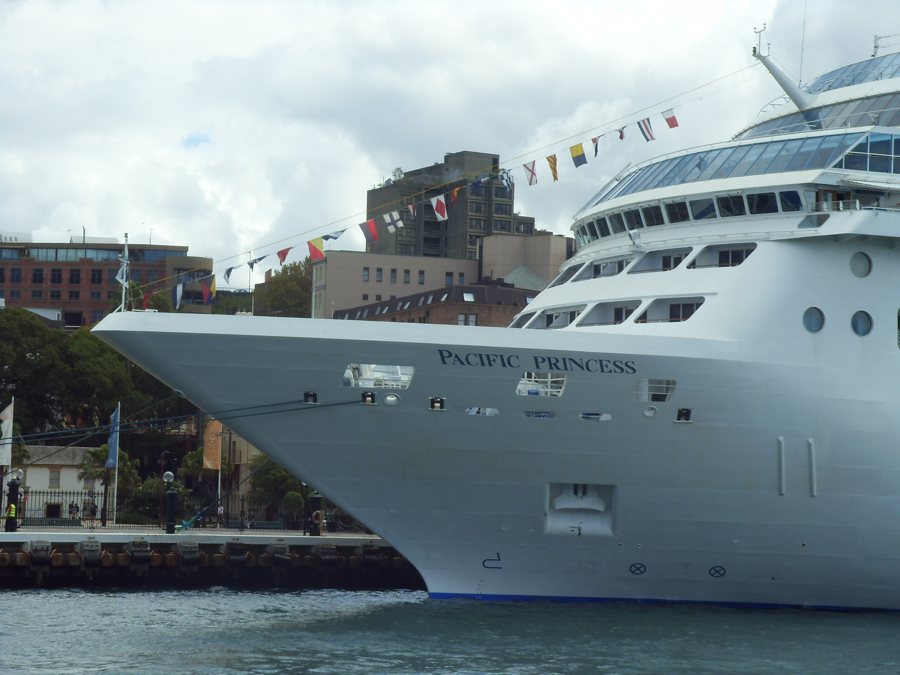
Maritime Flag and Signaling Traditions Aboard Ship
A flag aboard a ship can indicate affiliation, accompany a ceremony, or convey a message. For signaling, what matters is which combination of symbols has a meaning under a commonly used code. The development from the first international commercial code to the International Code of Signals used today shows how visible flags became a coordinated means of communication between ships.
From a Commercial Code to a Common Language
Before the first international signal code was introduced in 1857, individual flag signals already existed, but national systems were not always understood across borders. In 1857, the British Board of Trade published a commercial code for all nations. It used 18 flags for consonants; combinations of up to four flags could convey more than 70,000 messages.
The code changed to meet practical needs. An edition in 1903 added, among other things, flags for vowels. After further revisions, a new edition of the International Code of Signals was adopted in 1965. The New Zealand Maritime Museum describes this edition as placing greater emphasis on navigational safety. The code assigned meanings to letters, numbers, and specified messages, so that signals were intended to be understood not just by a single national fleet.
Objects Tell the Story of Their Use
The history can also be seen in small learning aids. The New Zealand Maritime Museum preserves handmade flashcards created by Wilfred Champion in 1916. One side shows flags and pennants, while the other gives their meanings under the International Code of Signals at the time. Cards like these document how sailors learned the extensive code.
Flags and signal books are therefore both working objects and records of maritime culture aboard ship. They tell of efforts to make communication between ships reliable across national borders, and of how priorities shifted from commercial messages toward standardized safety signals.
Distinguishing Flags from Signals
Not every flag flown aboard a ship is a nautical message: a national flag or festive display serves a different purpose from a signal flag. For a signal, its meaning is determined by the code in use and the specific combination; the nautical watch on the ship’s bridge also works with other navigational information. Historical examples explain how these systems developed. They differ from location-specific beacons and fog signals, whose identifying signals are published for a particular station. A flag signal today must be read in the context of the rules and operational circumstances currently in force.
Photo: Markus Lenk
